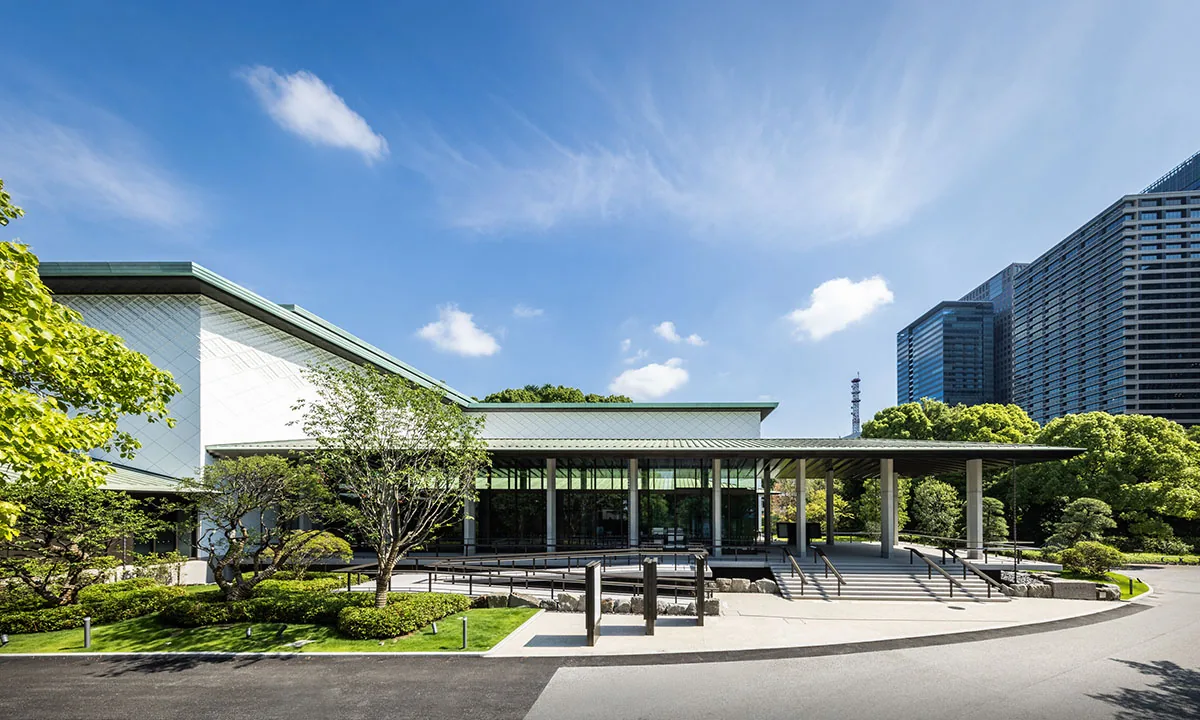
Art the Imperial Family itself handed down, shown inside the Imperial Palace. It has been on view here since 1993; the new building, with larger galleries, opened in full on November 3, 2026.
The Sannomaru Shozokan's collection was not bought. In 1989, the Emperor Emeritus and Empress Kojun gave the State the paintings, calligraphy, crafts and historical materials passed down in the Imperial Family for generations; donations from the former Chichibu-no-miya household, the personal effects of Empress Kojun, the former Takamatsu-no-miya household and the Mikasa-no-miya household followed. The "Shozo" in the museum's name comes from the head of the Kura-no-tsukasa, the office that managed the Emperor's articles under the ancient ritsuryo system; "Sannomaru" is the ground beneath it, the Third Enclosure of the former Edo Castle.
So what is here speaks of what the Imperial Family has inherited, been presented with, and itself commissioned over more than a thousand years. Ito Jakuchu's Colorful Realm of Living Beings, Kano Eitoku's Chinese Lions screen, the Illustrated Account of the Mongol Invasions and the Soran-jo, which transmits the calligraphy of Wang Xizhi, are all National Treasures. Also here are the cloisonne vase by Namikawa Yasuyuki that Emperor Meiji ordered the Imperial Household Artists to make for the 1900 Paris Exposition, and the Bookshelf with Chrysanthemums in Maki-e and Mother-of-Pearl, made in a workshop set up inside the Imperial Palace. The list itself is the story.
When is best depends on which exhibition the guest is coming for: · November 3, 2026 – January 24, 2027, "Treasures of the Imperial Household: Where Beauty Arises": every work changes between the first, middle and last periods. The museum describes this as the first time Shosoin treasures have been shown inside the Imperial Palace; in the list of principal works, the mother-of-pearl red sandalwood biwa is in the first period (to November 23) and Kano Eitoku's Chinese Lions screen in the last (from December 23). · February 4 – March 14, 2027, "National Treasure Colorful Realm of Living Beings: A World of Color": all 30 of Jakuchu's scrolls shown together. The museum states that this is the first time in about ten years in Japan, the first since the museum opened in 1993, and the first since the set was designated a National Treasure in 2021. For a guest who knows Jakuchu, it is worth moving the dates of the trip to fit these five and a half weeks. · March 25 – May 16, 2027, "1,300 Years of Beauty in Japanese Calligraphy": about 100 masterpieces of calligraphy.
How to visit: every ticket is for a set date and time, no same-day tickets are sold at the museum, entry slots run in 30-minute blocks, and sales open period by period, so lock in the period you want first. Enter by the Otemon Gate, where there is a hand-luggage check; the museum is about 100 m inside. On Fridays and Saturdays it stays open until 8 p.m. On Fridays the East Gardens themselves are closed, only the Shozokan is open, and the Otemon Gate is the only way in. The East Gardens close at 18:00 at the latest, so an evening slot from 18:00 on means seeing National Treasures inside an Imperial Palace whose gardens have already closed, coming and going through the Otemon Gate. The museum has a single floor with three galleries; come in the daytime and you can carry straight on into the East Gardens (except Mondays and Fridays).
Who it suits: guests with a genuine interest in Japanese art, court culture and the Imperial Family; also itineraries that want to use an hour or two in central Tokyo to tell the story of "the Imperial Family" in full.