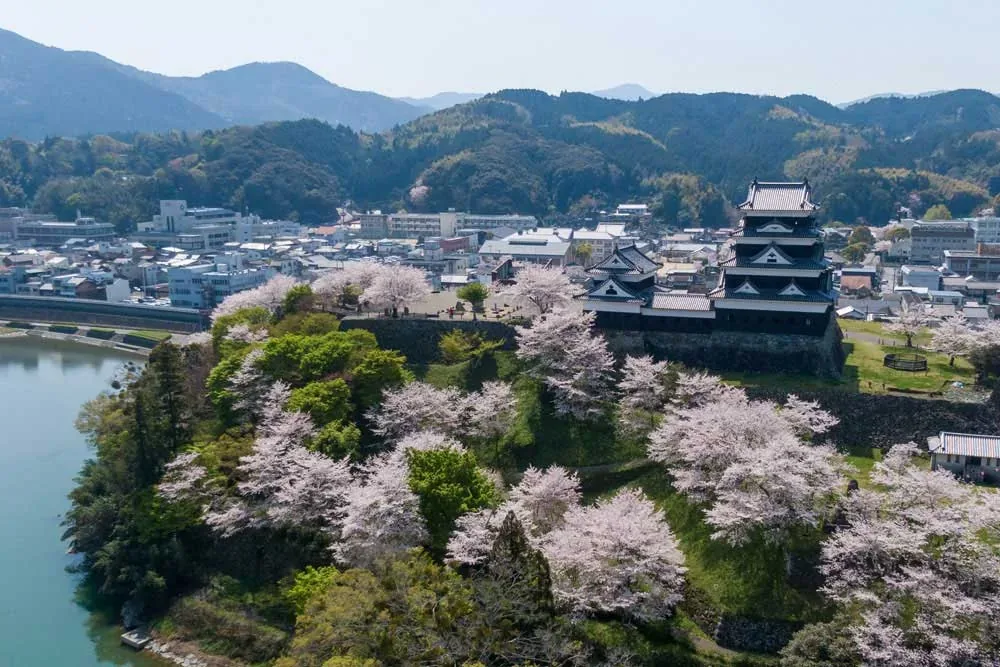
Ozu was the first castle in Japan where a guest could sleep inside the wooden keep itself. Not a hotel room built into a fortress: a night in the restored keep, in the place of its lord. The staging begins at the gate, with a matchlock corps firing a salute and a conch shell sounding to receive the guest as the house would once have received its master. For that night the grounds hold one party and nobody else. It is less a check-in than an investiture.
The evening builds in stages. Kagura is performed inside the keep, a banquet of local produce follows, and for a few hours a modern guest lives an Edo daimyo's night. In the morning the scene moves to Garyu Sanso, an Important Cultural Property known for its finely worked sukiya construction, the tea-house idiom of restrained natural materials. A special breakfast there carries the role into a second piece of heritage, so arrival, banquet and breakfast read as one line rather than three bookings.
This is the apex of an itinerary, the piece that settles what kind of trip it was. It is built for ultra-high-net-worth guests and the top tier of VIP incentive travel — people who have stayed in every luxury hotel and have never slept in a castle keep. One party a day, the first of its kind in Japan, a night held inside the national history: nowhere else sells the position, and it can only be arranged. What guests take away cannot be repeated for anyone else.