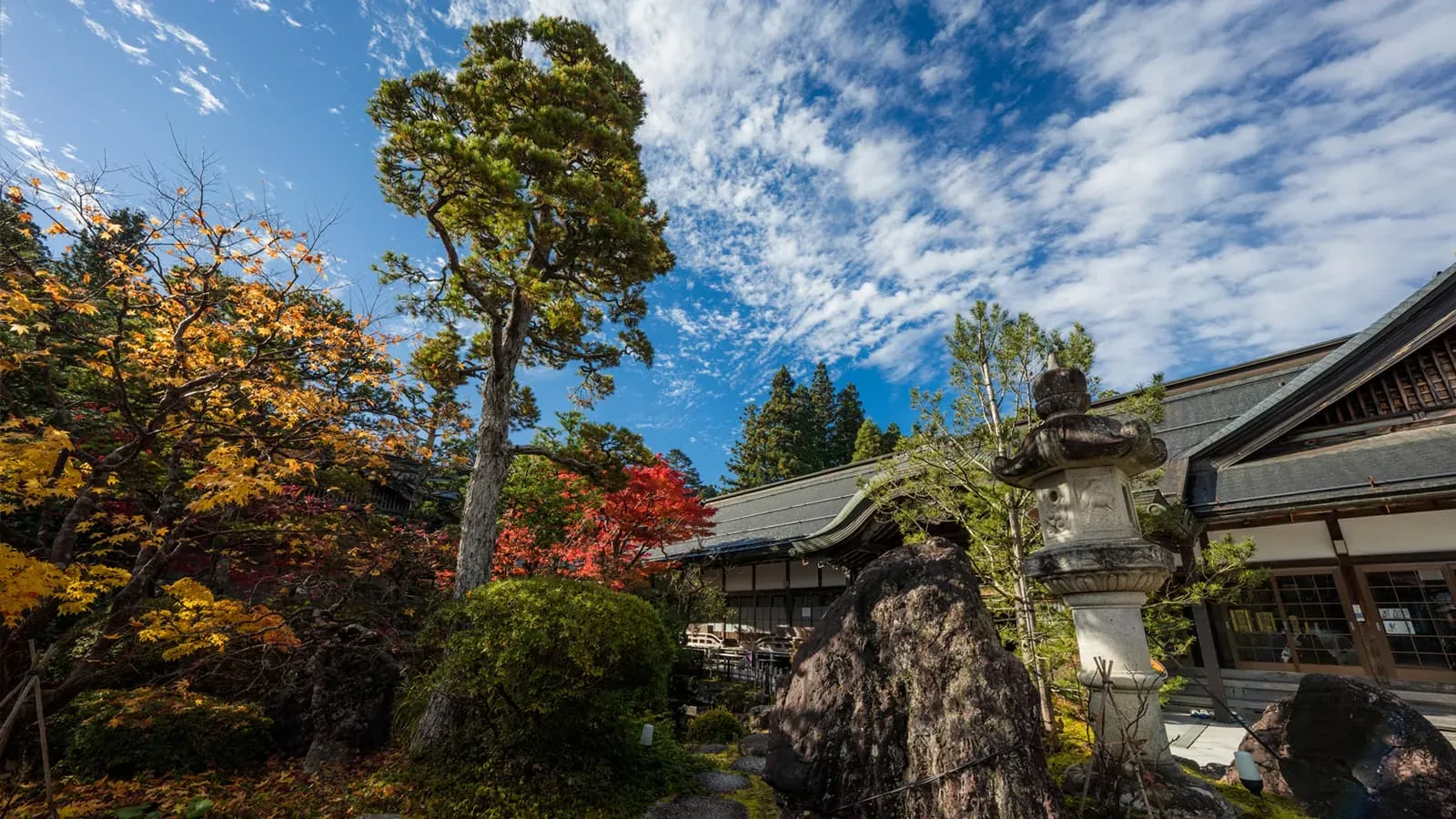
Ekoin stands at the mouth of the approach to Okunoin, where Koyasan's 1,200 years of prayer lead. Kobo Daishi Kukai opened the mountain in 816, and the whole of it is inscribed as a UNESCO World Heritage Site. Monks have kept the rites unbroken ever since, which is what makes it a living mountain. No other temple lodging holds this position: guests sleep at the entrance to the sacred ground that runs to the mausoleum of the Daishi.
A night here ties the two ends of Koyasan together. In the evening guests walk the burial ground of Okunoin by the light of a lantern handed over by a monk, with a guide from Ekoin itself: 200,000 memorial stones under cedars, and Kobo Daishi held to remain in meditation still. In the morning they sit before the goma, the fire ritual lit in the hall each day, where the red of the flame and the vibration of the chanting pass through the body. Stillness at night, fire at dawn — carrying both ends inside one night is why Ekoin is the temple lodging others are measured against.
The stay itself does not compromise. Detached rooms come with a semi-open-air bath and their own garden, so a place of religious training and a room of real quality hold together. Meals are shojin ryori, or Buddhist cuisine: koya-dofu, the freeze-dried tofu of the mountain, with seasonal vegetables, seaweed and mountain greens and nothing else. That is the Buddhist refusal to take life, set on a plate. What it offers is not luxury but purity. Guests arrive as lodgers received on sacred ground rather than as tourists, and fall into step with the mountain's rhythm of prayer, which no imitation Zen retreat reaches.