Plenty of people have eaten Hakata ramen; almost no one has made it. This session goes back to its source, the street food culture that came up from the stalls. Ramen in Hakata is not a finished dish carried out of a kitchen. It is the light of a late-night stall and a bowl of hot soup shared shoulder to shoulder with strangers on one bench, and that memory is what separates it from ramen anywhere else.
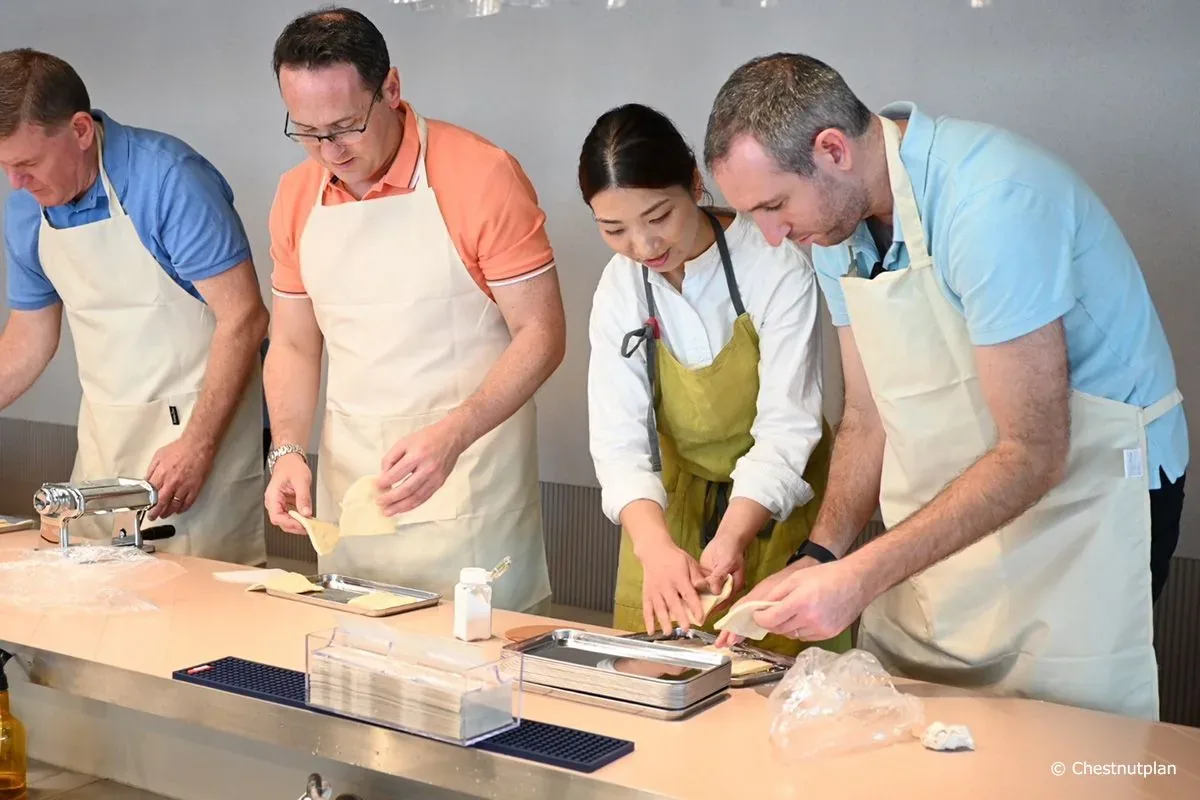
The work starts from nothing, with Ra-mugi, the ramen wheat Fukuoka developed itself. Guests tread the dough underfoot and feel it turn from slack to springy, then draw it out into the very thin, straight noodles that are Hakata's signature. The treading makes a picture, and it suits a group: everyone starts at once and the laughter does not stop. The noodles are boiled and eaten on the spot, and the soup tastes different for carrying the guest's own effort of ten minutes earlier.
Three things meet in this session: a low threshold, high participation, and a dish found only here. It asks no prior skill, yet in two hours a whole team has its hands in the soul of Fukuoka's food. Vegan, halal and soy-meat alternatives are available, so nobody on a restricted diet is left out — the detail that decides success with large international groups. It is the step that turns having been to Fukuoka into having taken part in it.