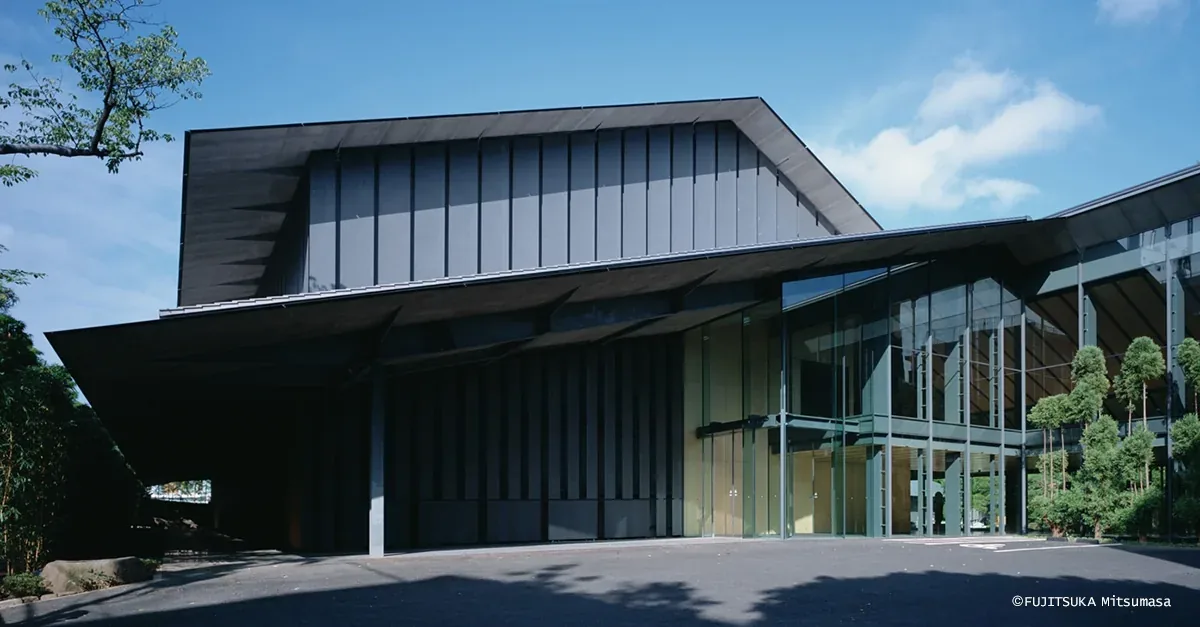
A private museum sits entirely apart from the noise on the most expensive ground in Omotesando. The entrance approach Kengo Kuma designed runs a long bamboo wall down one side over quiet stone, and within a few paces the busiest luxury avenue in Tokyo is shut away behind. This is not an ordinary gallery visit but a ritual crossing from the city into stillness.
The collection holds some 7,600 works of ancient East Asian art, one of the furthest points private collecting reached in modern Japan. What keeps brands and corporate VIPs here, though, is the celebrated Aoyama garden behind it: deep green, rare at the center of the city, with tea houses set through it and a different face in every season. Refined, still and restrained, the museum sits naturally beside the character of the leading luxury houses. Wealth is not displayed loudly here; cultural depth and empty space translate the high end into a quiet that can be breathed.
For a brand executive or a corporate guest who has seen too many rooms, the Nezu Museum offers an afternoon of slowing down, held at once by ancient art and a famous garden, in the middle of Omotesando and seemingly in another century. That stillness inside the noise is itself a courtesy nothing reproduces.