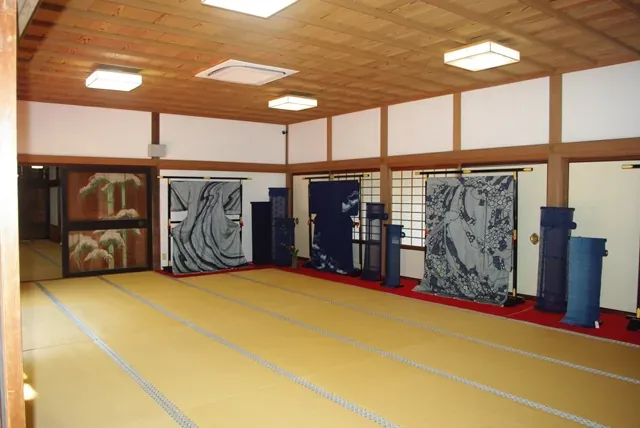
In Ohara, indigo vats sunk into an earthen floor are fed on ash, bran and sake, and ferment daily. Forty minutes north of central Kyoto by car, the mountains open into the basin. None of the crowds that fill Kiyomizudera reach here — only a stream, the ridges of the rice fields and, in autumn, the maples. Ai no Yakata stands in that landscape, and its vats behave like living things, breathing and changing color from one day to the next. This is not a place that dips cloth into a chemical bath; it is Japanese indigo at its source.
The dye itself comes from Shikoku. In Tokushima the leaves of the indigo plant are composted and fermented for a hundred days into sukumo, the highest grade of Japanese indigo and a material the country has kept in production for centuries. The artisans use not a drop of chemical assistant: the alkalinity of the lye and the work of microbes carry the cloth through repeated dips and airings, from yellow-green to the deep, lit blue known as Japan Blue. Guests lower the white cloth themselves and watch it turn as it meets the air — chemistry no shop selling finished goods can hand over.
For guests who want cultural depth, and for families traveling with children, this is a lesson in reading a color with both hands. It does not raise its voice and it does not perform. Between the hills and the autumn leaves of Ohara, it dyes the Japanese regard for nature, fermentation and time into a length of cloth that goes home. It turns looking at scenery into taking part in a living craft.