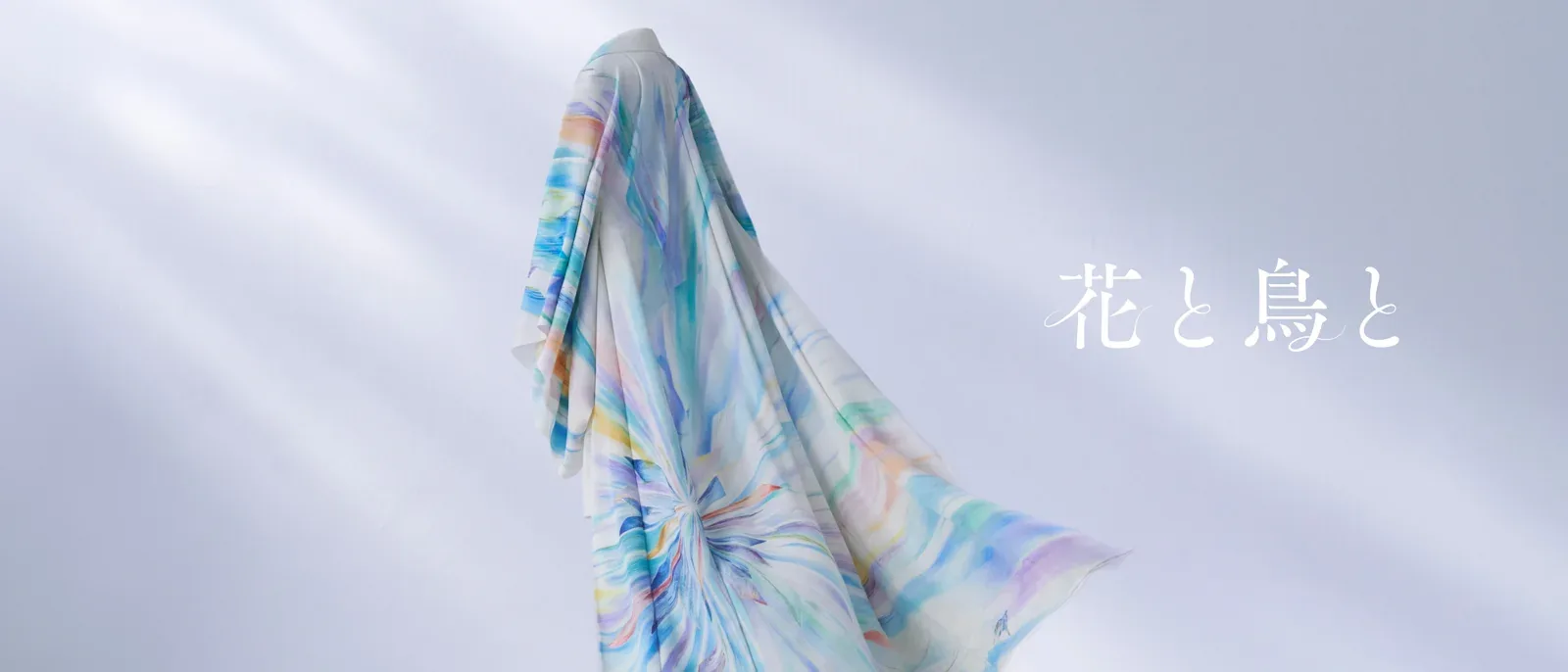
CHISO was founded in 1555 and is described as one of the oldest kimono houses in the world. While Europe was still in the heat of the Renaissance, this house was already dressing Kyoto's nobility and its temples and shrines. Almost every line of beauty in Kyoto leads back to a long-established house; very few can print that year. It is not a kimono shop with a history attached but a living history of dyeing.
The rarity sits behind the storefront, in a design archive and museum collection of cultural-property caliber. Centuries of patterns, drawings, color records and finished works make a gene bank of Yuzen, the resist-dyeing that lets a kimono be painted like a scroll. It is also a working dictionary, one that today's artisans still consult before picking up the brush. A single CHISO Yuzen passes through about 20 processes and can take six months—drawing the outlines, laying the resist paste, brushing in the color, steaming, washing—each stage handed to a different specialist pair of hands. Nothing here is bought off a rail; time is commissioned.
What the house gives is the standing to enter the deepest part of Japanese textiles. A collector can read in the archive how one pattern has been worked and reworked across four centuries; a commissioning client can have a family crest, a story and a chosen season written into a piece made to be handed down. That is the moment in an itinerary that gets remembered: a strand of Kyoto's lineage worn home.