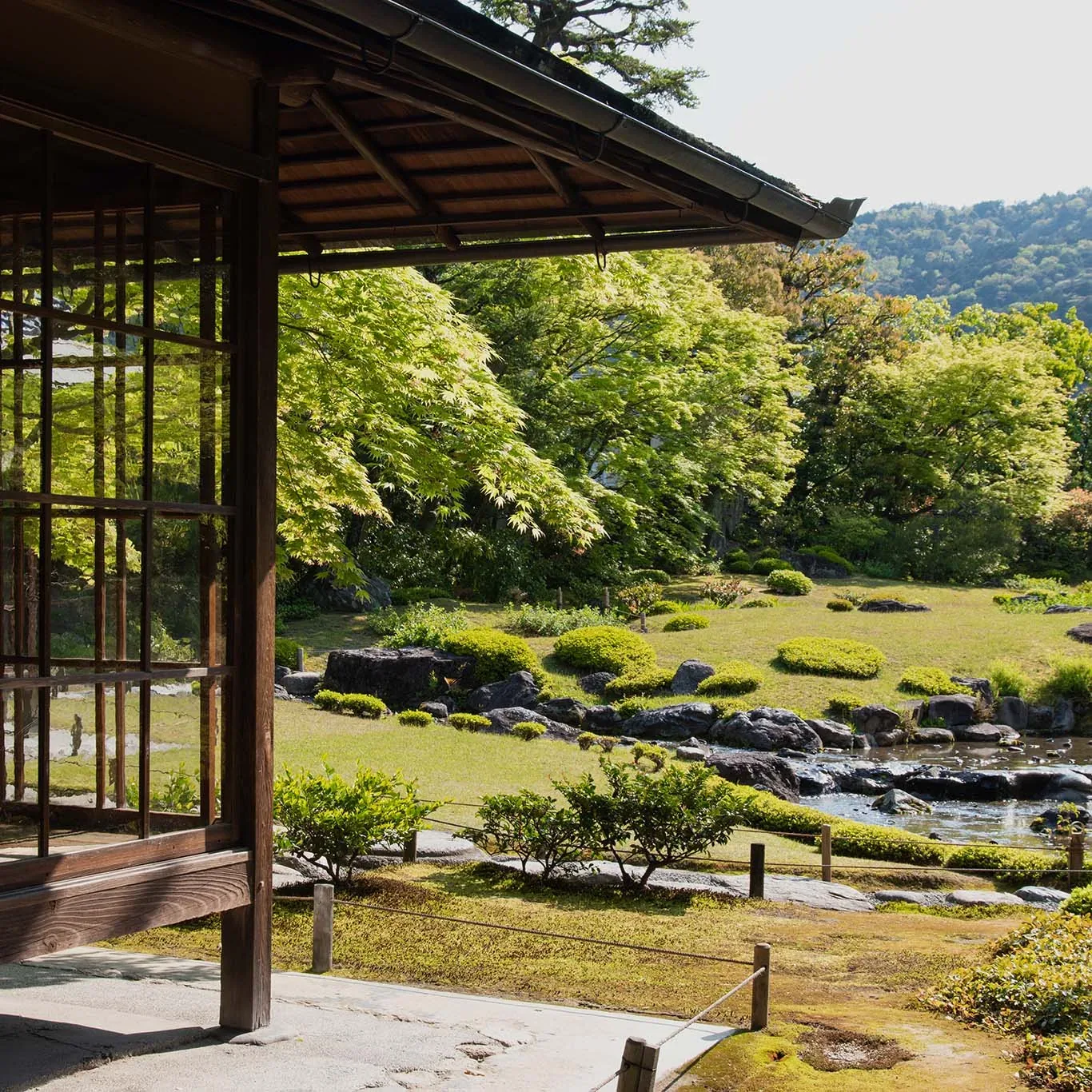
Murin-an is a garden made of a stream, grass and moss, with the Higashiyama hills borrowed into the view. The Meiji elder statesman Yamagata Aritomo built the villa at the foot of those hills, and the story worth telling is not the garden but a man of power stepping down from it to sit among water and light. He gave the design to Ogawa Jihei, who established the modern Japanese garden; Ogawa drew water from the Lake Biwa Canal through the grounds and made something remarkably open and bright. It is the opposite of the daimyo gardens that piled up stones to display authority. Here the stillness itself was designed.
So it does not work on a crowd; it works on a handful of principals. Seated in the main house, guests have the ridgeline and the sound of water for a whole field of view, and the conversation turns to essentials without being pushed there. An informal exchange between chief executives, a room in which a brand speaks about its own philosophy, a quiet half day in the middle of a long itinerary — the place reads as though it were built for those three.
It carries the standing of a nationally designated Place of Scenic Beauty, but its worth lies in the depth of the quiet, not the designation. Guests leave with the private memory that the Higashiyama of Kyoto was opened for them alone, not with a record of a famous garden.