Ozu Washi has traded paper on the same Nihonbashi ground since 1653, through fire, earthquake and war. For three and a half centuries the house has held this country's daily life and sense of beauty inside a single sheet of white, and its survival at one address is living proof that Japan's paper culture has run unbroken. What is handled here is not a craft object but Japan's white itself — the surface people write on, wrap in, keep records on, and pray with.
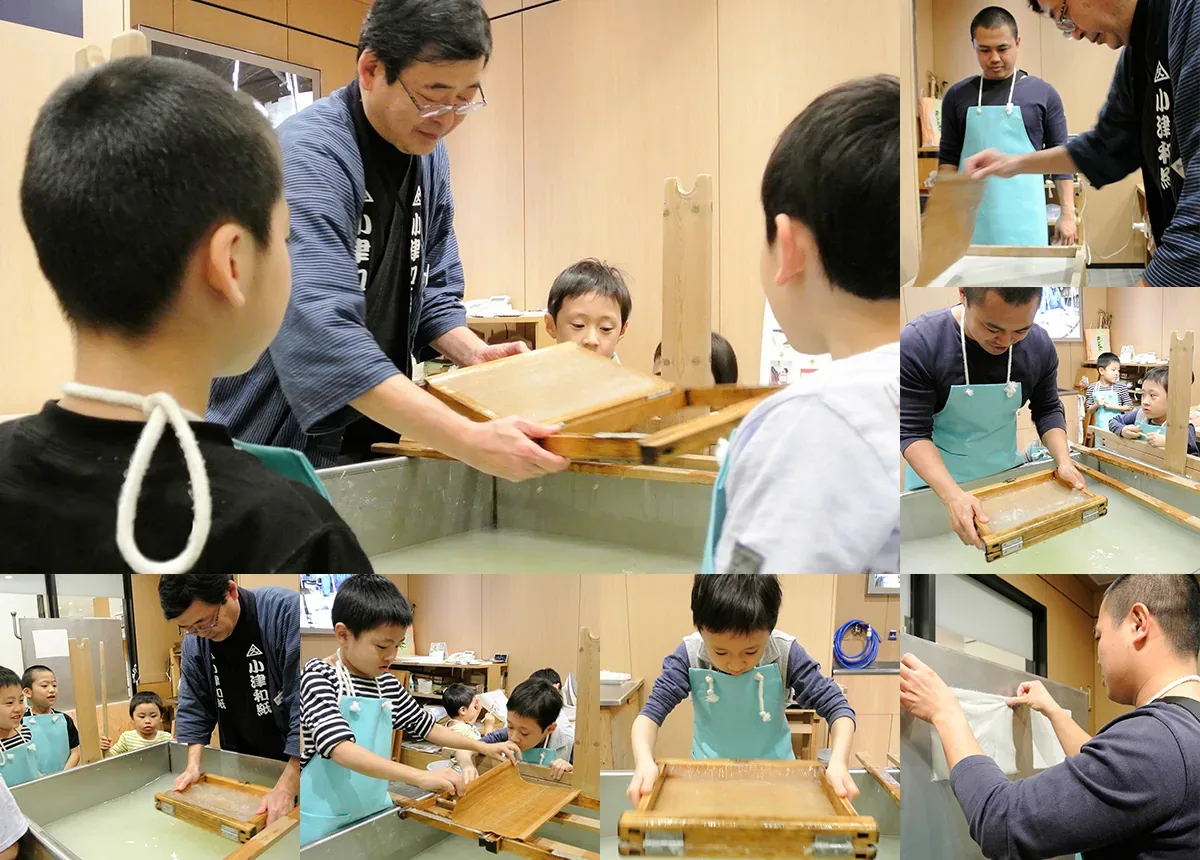
The heart of the visit is making that sheet by hand. The mold is rocked back and forth and side to side in cold water until the fibers lock thin and even, and in that sequence of movements a guest learns with the hands rather than the head why a sheet that took time and handwork is worth something. It dries and goes home: one sheet that exists nowhere else, made in the center of Edo with the water and the hands of a house 370 years standing.
For a high-value business-events or corporate program, the Nihonbashi address is the decisive advantage. It slots without strain between a central hotel and a round of meetings, and every participant leaves holding a sheet of their own — something physical that carries a story and a long-established Japanese house behind it. As a gift for invited guests, or as the day a team remembers, there are few better openings.