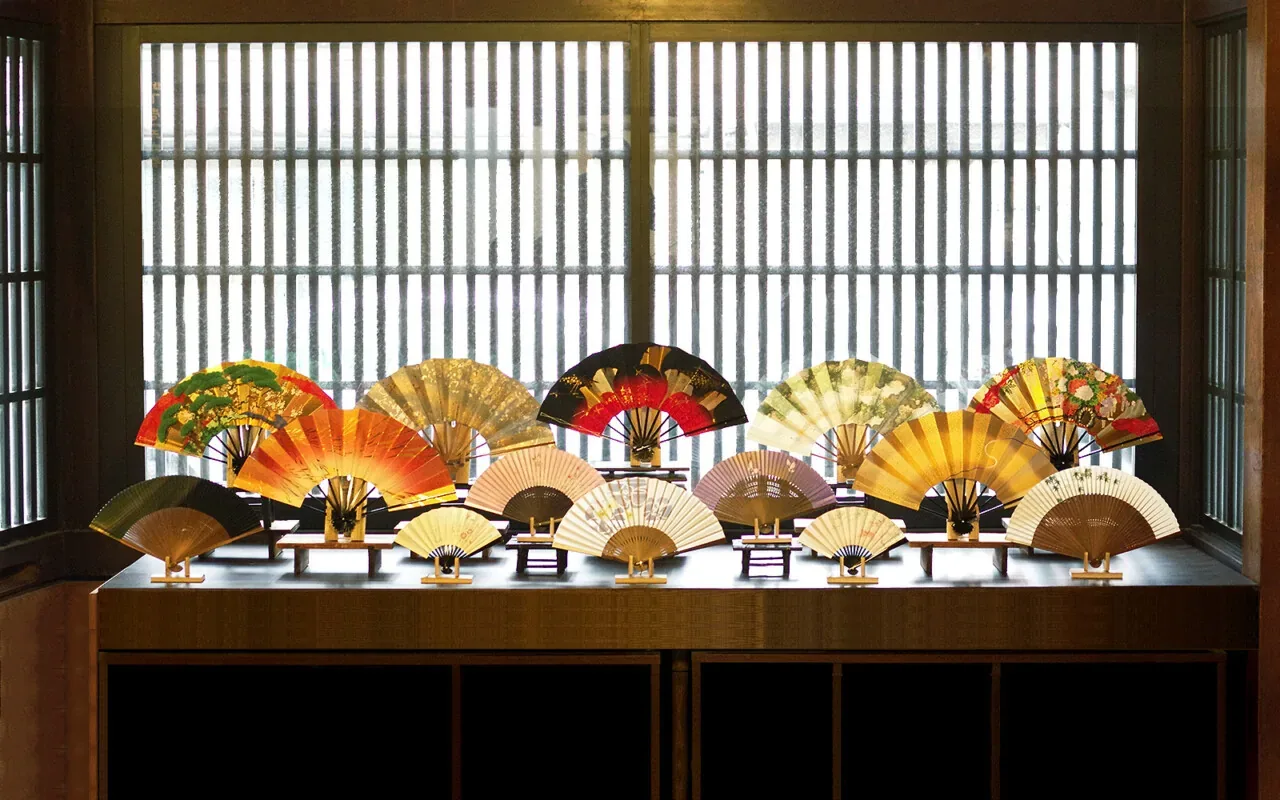
Summer in Kyoto begins with the air moved by a single fan. Onishi Tsune Shoten has made Kyoto folding fans since 1913—a craft that fuses painting, paper, bamboo and etiquette into one object—and it still works inside a 150-year-old machiya, a townhouse built on a narrow lot. Behind the lattice door is not a shop but a piece of Kyoto daily life still breathing: light angling in from the courtyard garden, the clean scent of bamboo ribs, one fan face after another waiting for a design.
Guests work rather than look. They paint a design onto a fan face inside the machiya, then learn how a fan is properly handled, with a bowl of tea alongside—the most understated lesson in Japanese hospitality there is. A fan moves air, and it also carries respect, the interval between people, and a sense of the season. A partnership with a century-old gold-leaf studio takes the finish to the most exacting layer Kyoto offers.
For guests at the top of the market this is far more than a fan-making experience. The basic painting lesson can be raised into a private cultural evening, the machiya taken whole for one family or one corporate group, so that a fan painted by hand and carried home becomes the emotional anchor of the whole Kyoto trip: a token the guest helped make, carrying a century of the house's intent.