Nihonga is a word that invites misunderstanding. It does not mean "paintings by Japanese people"; it names a specific way of working — pigment ground from minerals, animal glue, washi paper or silk. The color is the color of the stone itself, which is why it does not fade so much as settle. When Western painting arrived after the Meiji Restoration, this method was deliberately kept alive, and became a genre in its own right.
The Yamatane Museum of Art was the first museum in Japan devoted solely to nihonga, opening in 1966 out of the private collection of a leading financier. It still does only this one thing. Tokyo has many large general museums; here every wall from beginning to end holds one kind of painting.
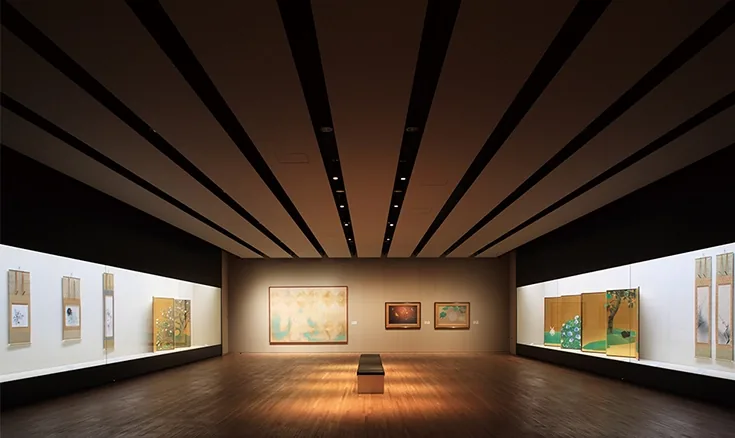
The usable spaces are the gallery and lobby (100 sqm, 50 standing). The scale is small, which makes it right for groups of fifty or fewer who genuinely want to look at the work — a large party would simply crowd the paintings out of view.
Nihonga is intensely seasonal — cherry in spring, water in summer, autumn grasses, winter snow — so an exhibition is itself an account of how Japanese eyes read the year. It sits in Hiroo, an easy hop from the Roppongi and Ebisu side of the city.