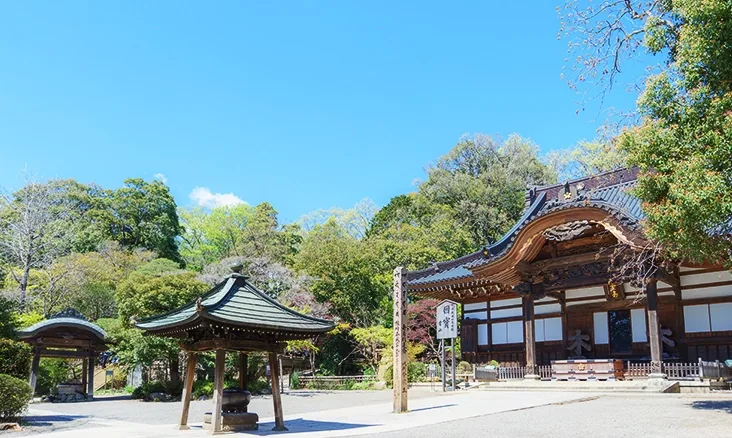
Jindaiji was founded in 733. It has belonged to the Tendai school since the Heian period, so it carries about 1,300 years. What began it was not a power but water. The precinct, ringed by its guardian forest, springs clear and constant, and in earlier centuries that flow watered the fields downstream. People gathered for the clean water, gratitude for the spring grew into a plain reverence for a water deity, and only after Buddhism arrived did anyone recognize the site and build a temple. Water first, then belief, then the temple — that order is what sets it apart from most temples in Tokyo.
From the Edo period it also became known for soba. Jindaiji soba was praised by pilgrims and presented to the shogunal house. So finishing a visit with a bowl of soba is not a tourist route; it is a three-hundred-year habit.
The venue is the precinct itself: an outdoor space of about 800 sqm takes a standing reception (the official listing gives 200 seated, 400 standing). Watching over the evening are many Buddhist images including the Hakuho Buddha, the oldest national-treasure Buddha in eastern Japan. A guest stands with a glass in hand and looks up at a figure of thirteen centuries.
It belongs in the middle of an itinerary. Coming out from the center to Chofu the green thickens and the pace slows on its own, and yet the weight does not drop: a national treasure, thirteen hundred years, and a bowl of soba a shogun once ate, all inside one set of walls.