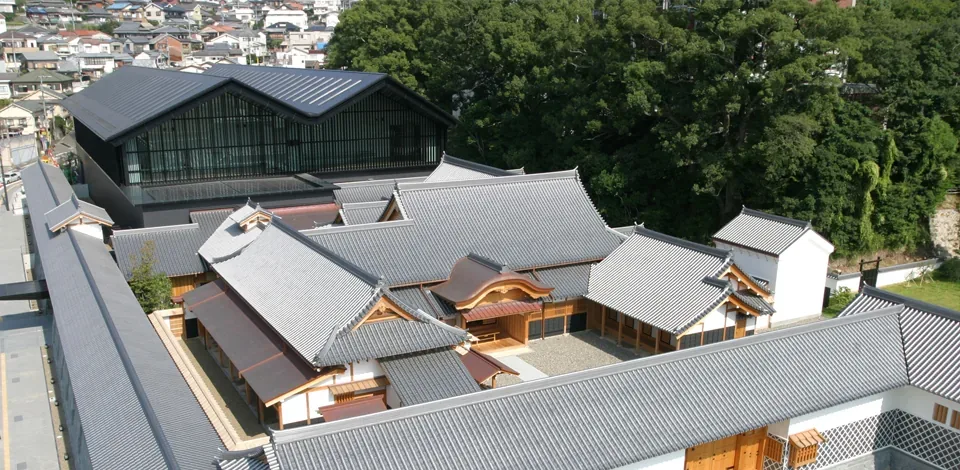
The museum stands on the site of the Nagasaki Magistrate's Office of the Edo period. There the shogunate exercised government and diplomacy in the one port city open to the outside world. Part of the building has been faithfully reconstructed. Guests step onto the ground where it was settled how Japan and the world would deal with one another — weight no new venue can supply.
Its subject is wa-ka-ran, particular to Nagasaki: Japanese, Chinese and Dutch, which is to say Western, culture meeting and merging here. The city did not simply receive what arrived from outside. It worked three civilizations into a form of its own, and the traces are still in the cooking, the buildings, the crafts and the language. A reception inside a museum about exchange is itself an address to international guests.
The evening composes into a narrative: a program by geisha; ozashiki-asobi, the parlor games played with them; and shippoku, the Nagasaki banquet cuisine that is wa-ka-ran on a table top, where one party sits around a single table and dishes from east and west share it. Historical ground, a subject of exchange, and performing arts and food that sequence together make an ideal stage from which to speak to international guests through a city's history of openness.