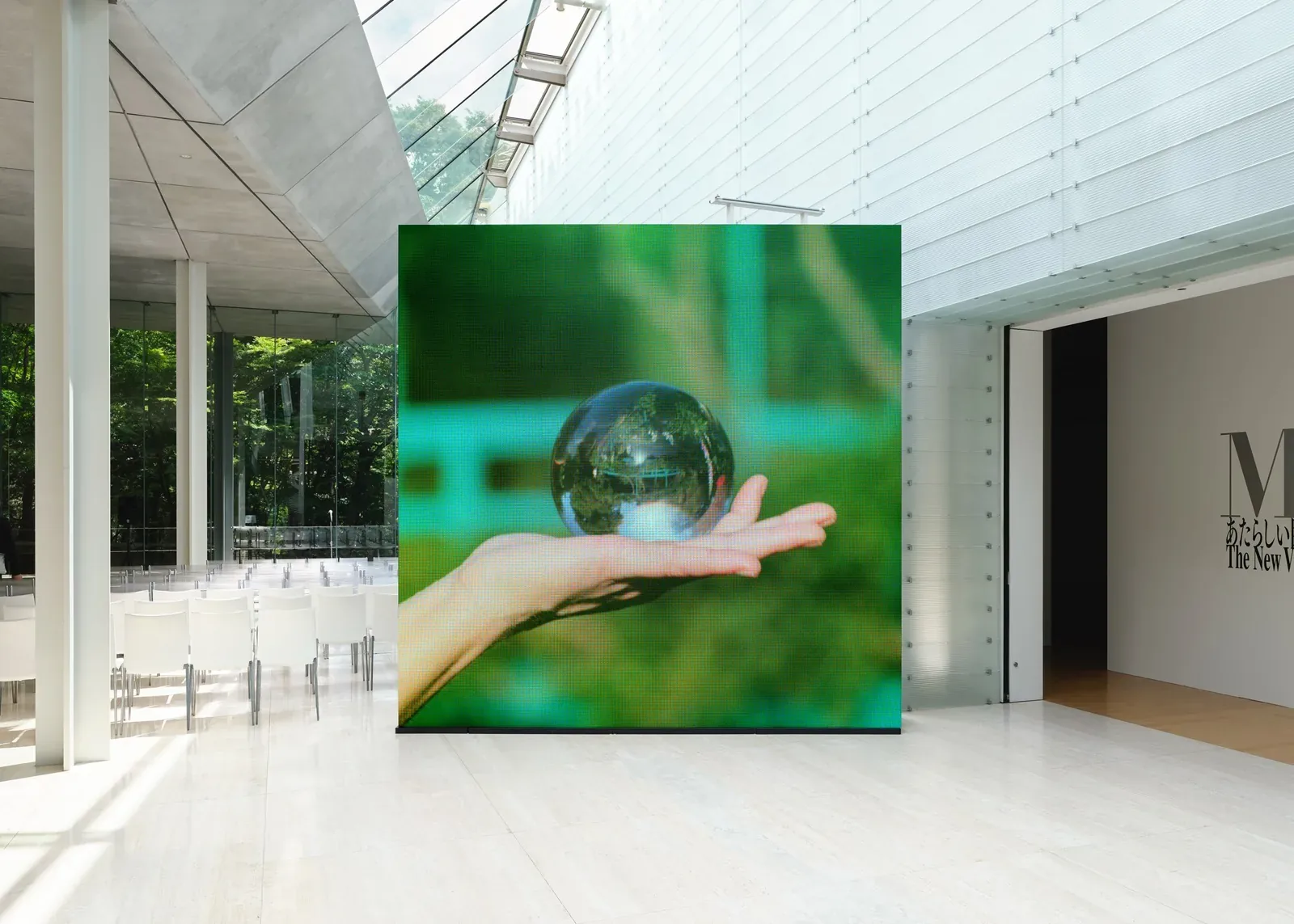
In the forest at Sengokuhara in Hakone there is a museum you can barely see. The Pola Museum of Art holds its height above ground to eight meters and puts most of its volume underground, so that the woods around it are left undisturbed. When it opened in September 2002 it placed coexistence with the nature of Hakone first. From bright ground level the visitor descends slowly into the galleries, as though entering a still room among the trees, and what waits in that stillness is Monet, Renoir, Cézanne, van Gogh and Picasso.
The collection came from one man, and its provenance is a story in itself. Tsuneshi Suzuki, second-generation head of the family that founded the Pola cosmetics house, gathered about 10,000 works privately over more than forty years. At the core are some 400 Western paintings of the nineteenth and twentieth centuries, and around them Japanese painting in the Western manner, nihonga, East Asian ceramics, glass and even cosmetic implements. This was not assembled to a budget. It is one lifetime of looking, and every work on the wall was chosen once by the same pair of eyes.
What is hard to come by here is not the ticket — anyone can buy one. It is the fact of a museum only eight meters tall, and of one person's lifetime of judgment kept whole inside a single forest. Placed in an itinerary it works as a quiet high point: paintings of that weight and a building sunk into the woods, present at the same time, with no need to raise its voice.