Fukuchiin is the only temple lodging on Koyasan with a natural hot spring of its own. Koyasan is a mountain of practice: the whole of it is a UNESCO World Heritage Site, and for 1,200 years, as the head seat of Shingon Esoteric Buddhism, its monks have kept prayer and precept. Comfort has long been set aside here, which is what makes Fukuchiin rare. It stands inside that discipline and still treats rest as a legitimate purpose, one of very few shukubo on the mountain to do so.
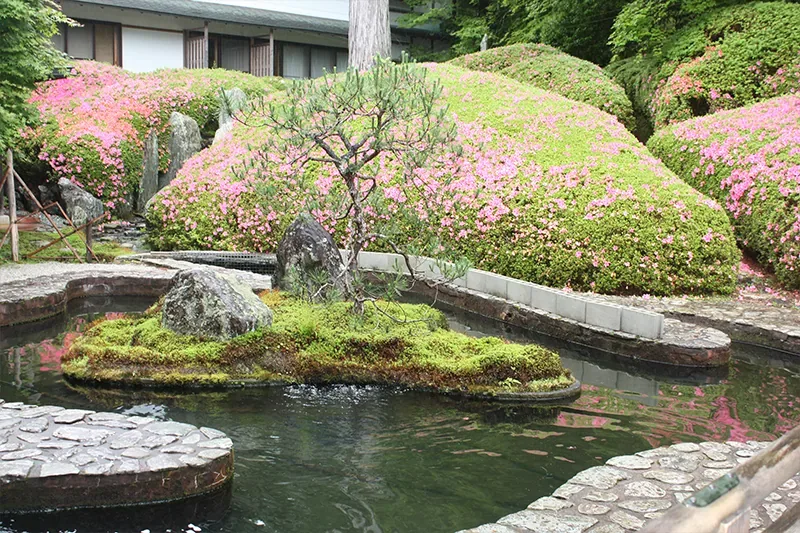
Two things only Fukuchiin has make that possible. The first is the spring: genuine carbonated water rises at about 800 meters, on sacred ground, and after a day of pilgrimage and meditation it unwinds the body from the core. The second is a dry landscape garden by Shigemori Mirei, the defining garden designer of the Showa era. His composition of stone, sand and moss sits inside the stillness of an Esoteric temple, so what opens outside the window is not simply a garden but a work with a place in the history of the twentieth-century Japanese garden.
The principal image here is Aizen Myoo, the deity of bonds and prosperity, and that choice says where the temple stands: on the side of connection rather than refusal. It is held to have been founded some 800 years ago by the ajari Kakuin, which places it in the line of lodgings running back to Kukai's founding of Koyasan in 816. Meals are shojin ryori, or Buddhist cuisine, built from what the mountain gives, koya-dofu and Koyasan wasabi among them. The guest who will keep the spiritual program but will not give up a hot spring and a comfortable night concedes nothing here, and placed after Okunoin or a sitting, Fukuchiin is the interlude that lets a raised mind settle.