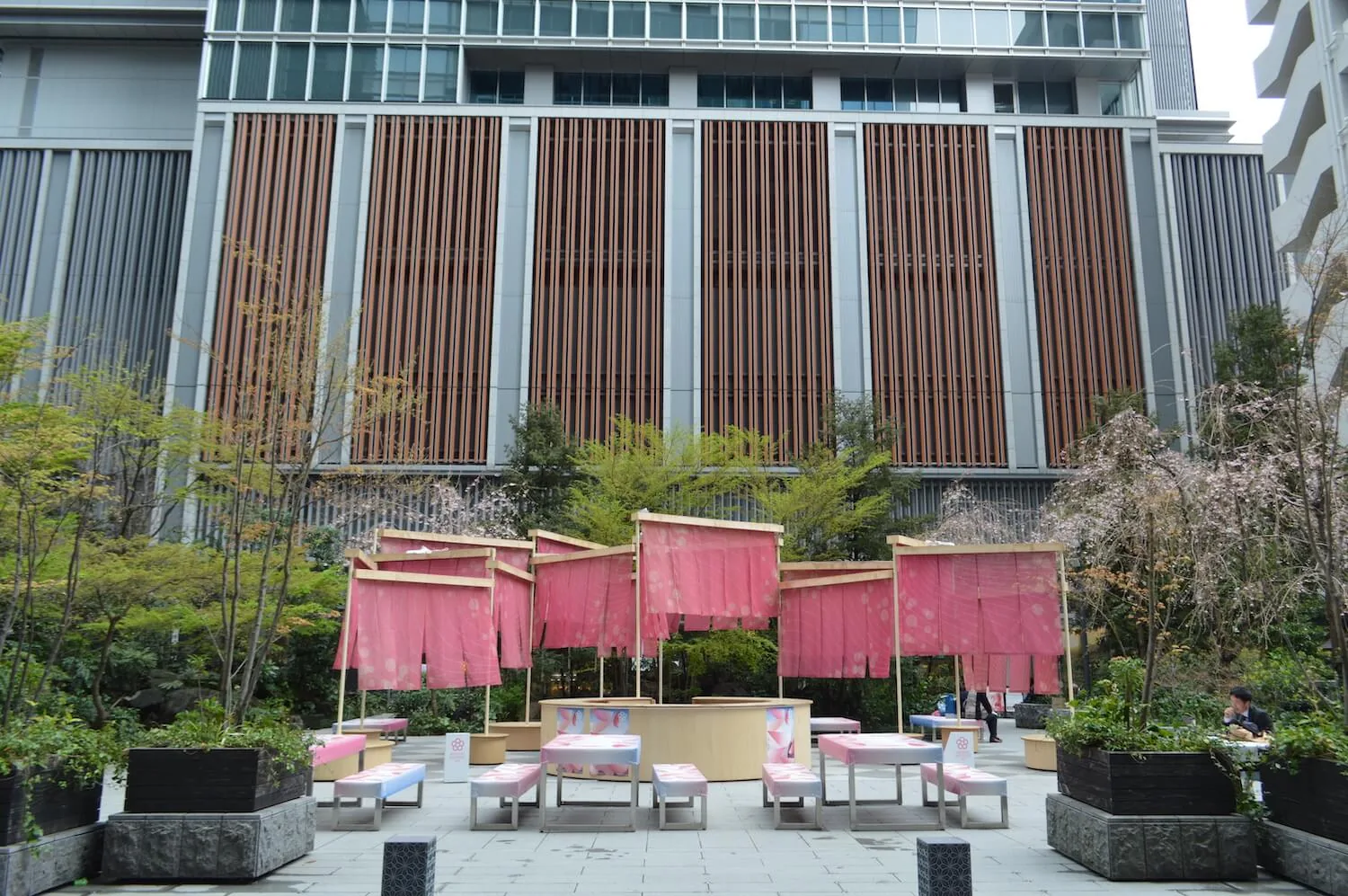
Most Tokyo receptions begin and end inside a hotel banquet room. The difference here is that the venue is not one building but a whole district. In Nihonbashi, the commercial and cultural center of Edo, a pedestrian street runs between the buildings of COREDO Muromachi to the green-ringed Fukutoku Garden and on to Fukutoku Shrine, and that entire stretch can be taken as the stage.
The heart of it is how deep the memory of this ground runs. Fukutoku Shrine, also known as Mebuki Inari, is held to have stood here already in the Jogan era (859–876), and it enshrines Uka-no-Mitama, the deity of the harvest. The present hall was built in 2014 with the Nihonbashi redevelopment, and the adjoining Fukutoku Garden, about 1,000 square meters, opened in 2016 — Mitsui Fudosan laying the newest urban design over more than a thousand years of devotion. Guests walk stone paving hung with noren shop curtains and seasonal lanterns, put their hands together at the shrine, and take a welcome drink in the garden square. The modern city and the old ground cross with every step.
The advantage is freedom of design. The shrine precinct, the garden square, the great-roofed plaza at COREDO Muromachi Terrace and the shops inside the complex compose into a welcome reception, a sake tasting and roaming networking as one piece. It keeps central Tokyo access, minutes from Tokyo Station, and still hands participants the story of having been received into the historic core of the city, which a closed banquet room cannot do.