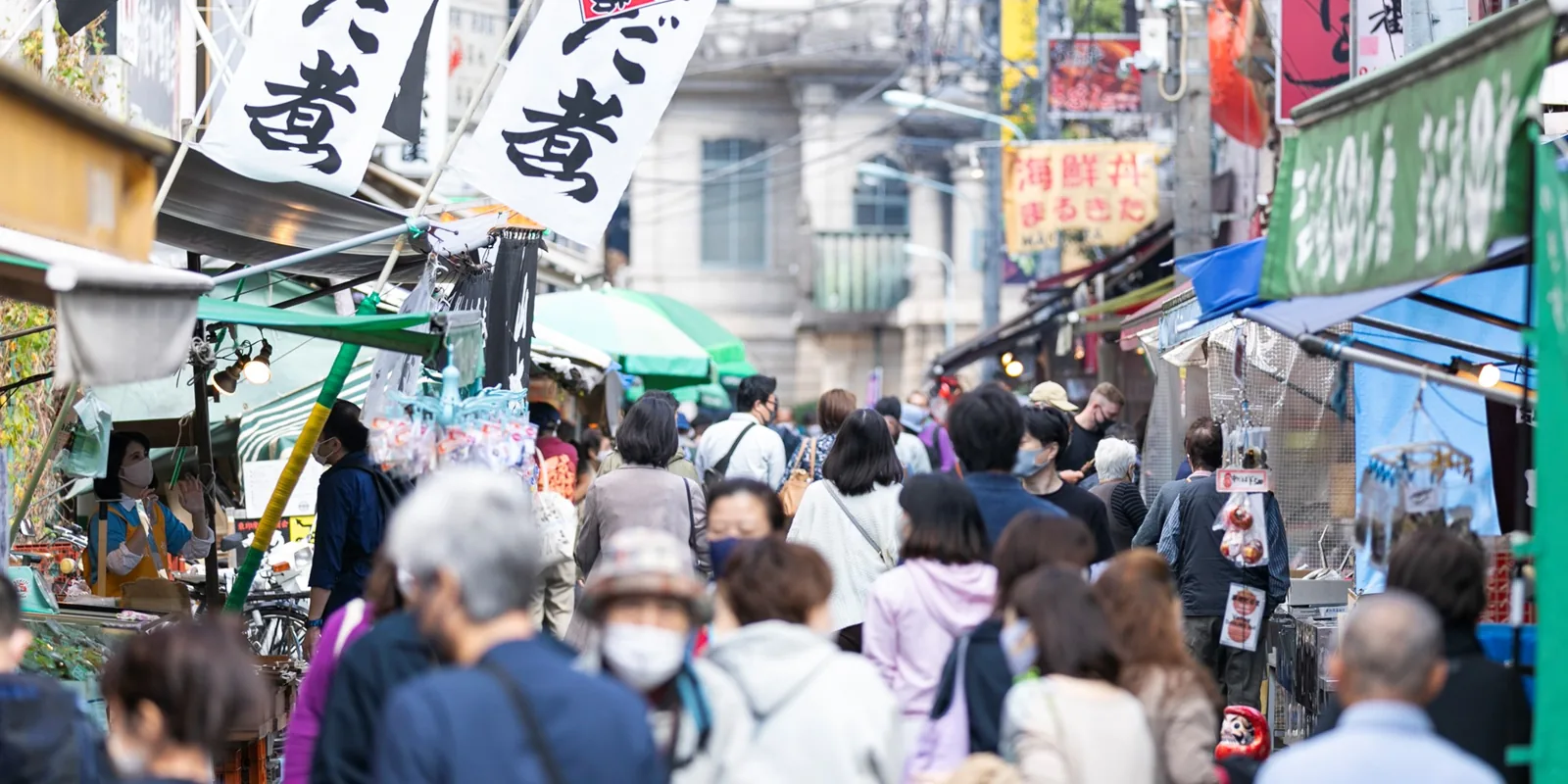
One thing to be clear about first: you come to Tsukiji for breakfast.
Not for lunch, and not to shop. The street is already moving as the light comes up. Fresh fish, fruit and vegetables, meat, dried goods, one shop against the next, with eating places and kitchenware shops wedged in between, packed so tightly that when someone comes the other way you have to turn your shoulder. Steam climbs steadily out of the pots. The people eating standing up keep their heads down and do not talk; they finish, set the bowl down and go.
The street was not built for visitors. For more than eighty years it has grown into what it is alongside the professionals of good food — the people who come to choose stock for their own kitchens every day, and who have raised it to this level by being hard to satisfy, time after time. Which is why the word Tsukiji is still used as a byword for eating well.
Which is to say that walking through it, you are walking through somebody's place of work. The way a stallholder hands you something is the same way he hands it to a chef; there is no second version kept aside as a performance for guests.
How to eat is simple: make no plan, eat as you walk. See a queue and join it; see steam and stop. One hand holding, the other cupped underneath, deal with it standing at the side of the street, then carry on.
Only one thing needs checking beforehand: the shops keep different days, and on the days the central wholesale market is closed a good many of them close too. Confirm your date against the official calendar before you set out.
Breakfast over, your hands are still a little cold and you carry a bit of the smell away with you. At that hour most of Tokyo is only getting up — and you have already eaten, on this street, a breakfast that people here have been making for more than eighty years.