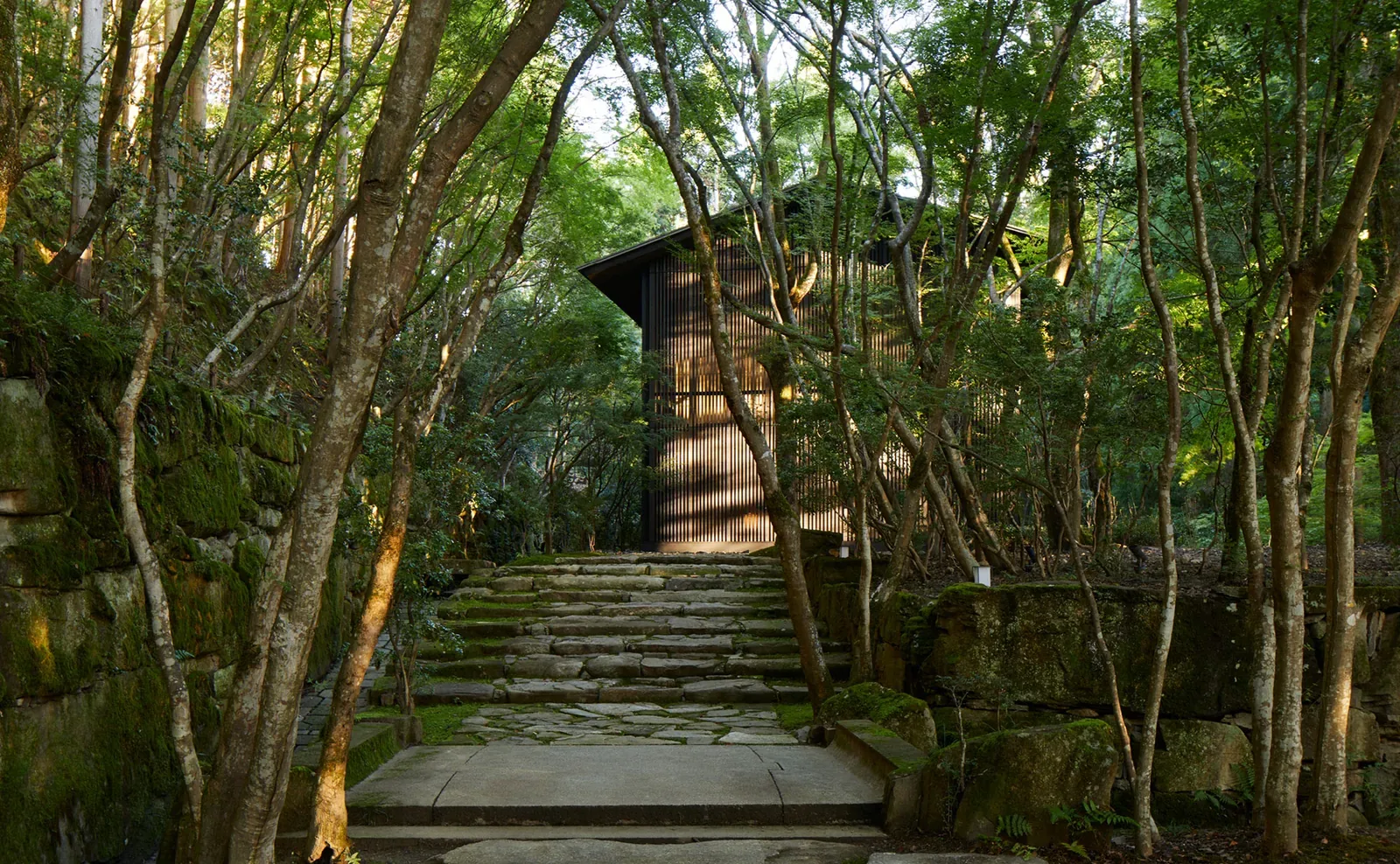
Kyoto's famous inns stand by the Kamo River or deep in the machiya of Gion. Aman Kyoto lies outside the city altogether, in the foothills of the three Takagamine mountains, within walking distance of Kinkakuji, inside a garden that moss and woodland had quietly taken back. Stone paths lie under moss, a stream off the mountain crosses the grounds, a few low pavilions sit among the shadows of the trees, and a natural hot spring rises from underground. It is not simply quiet; it is the stillness of being wrapped in forest until even time slows down.
What is rare is not that you cannot book it, because you can. What is rare is the ground itself. By the resort's own account this was, some four hundred years ago, land held by Hon'ami Koetsu, and the Rinpa school began in these foothills at the start of the Edo period. A later owner dreamed of building a textile museum here and spent years bringing the garden on, and in the end no museum was raised: the forest was left to do the talking. The moss path a guest walks is what those two intentions left behind, laid one over the other.
Twenty-six rooms in all. Twenty-six is a number that one family or one executive team can fill entirely, and it also means that availability on any given night is thin. So the property works as the close of an itinerary or as its base: days spent down in the city among temples, tea and artisans, nights withdrawn into a forest that belongs to nobody else. What guests actually remember is the quiet.