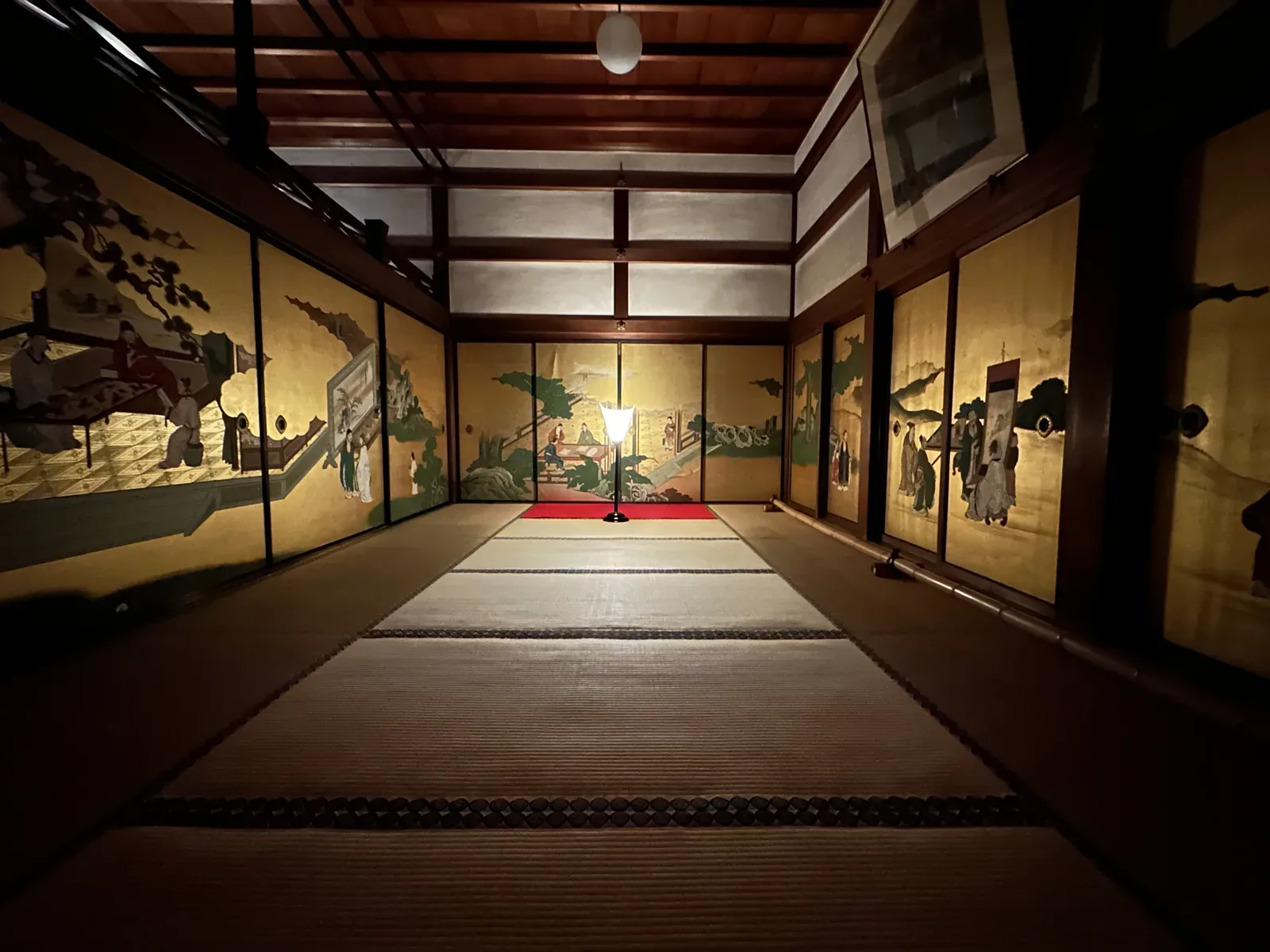
Most visitors see a hojo of this rank from behind a rope; here it is cleared for one party's zazen. Shunkoin sits inside the vast complex of subtemples at Myoshinji in northwest Kyoto, and almost no sightseeing route reaches it. Its weight is not the gate but the hojo itself, the abbot's quarters, designated an Important Cultural Property. For that hour the stillness of the stone garden, the breath of old timber and the angle of light through the sliding paper screens belong to the few people sitting in the room.
This is heavier than trying meditation once. Zen in Japan has never been a relaxation technique; it is training in how to see the present moment. As the teacher brings attention back to the breath and to this single meeting, the noise drops away and ma, the charged interval between things that Japanese design treats as material, becomes something a person can feel. For many guests, half an hour like this is the first time ichigo ichie, one time, one meeting, means anything concrete.
One sitting can also extend into half a day. After zazen the same hojo takes the tea ceremony, calligraphy, shojin ryori, or Buddhist cuisine, or the koto: sitting, drinking, writing, eating, one room and one philosophy in layers. It works either as the still anchor of a journey or as a self-contained morning.