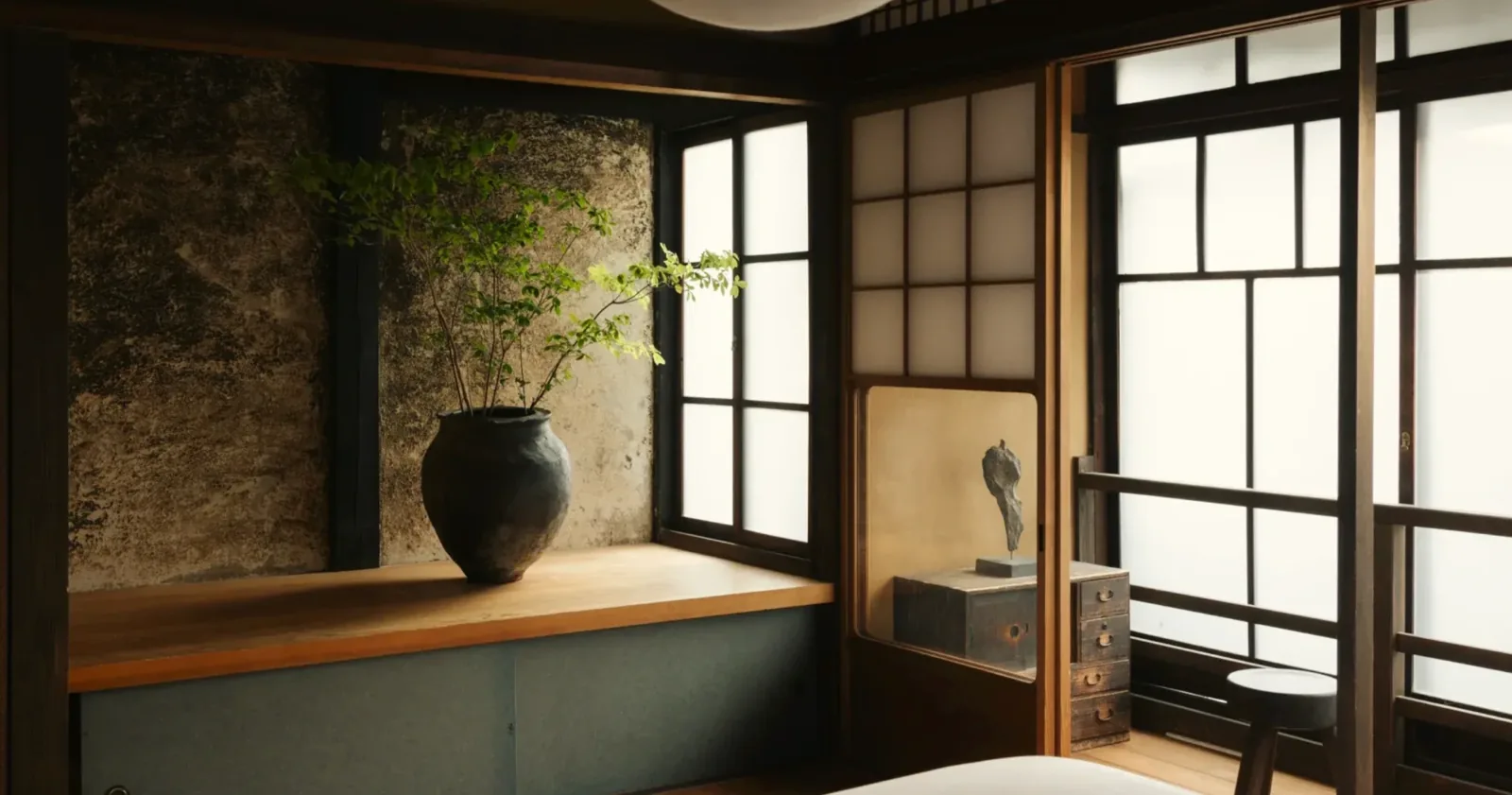
One Kyoto experience no hotel can supply: not staying in the city but keeping a house in it. This is a restored kyo-machiya, a Kyoto townhouse that serves as both shopfront and home, certified as heritage of cultural-property standing. The long narrow eel's-bed plan, daylight dropping into the tsuboniwa courtyard garden, the lane filtered through lattice windows, passages as quiet as a Noh stage. The house belongs to one family alone—no front desk, no stranger in the corridor, no opening hours. From the moment the lattice door slides open, it is theirs.
For high-end families and culturally serious travelers, what this offers is not a room count but two things that almost never arrive together: complete privacy, and the real texture of Kyoto life. A five-star hotel gives service without belonging; an ordinary guesthouse gives belonging without quality. A restored machiya of cultural-property standing gives both—the stillness of century-old timber and tatami rooms, with the freedom of a whole house nobody else enters. Children run beside the courtyard garden, elders take tea on the veranda, and the family sits in one room in the evening and lives the way Kyoto lives instead of ticking sites off.
Inside an itinerary it is not a sight but the anchor of the whole Kyoto stay: days spent apart at temples, at tea, with artisans, and every evening a return to a house that is theirs. It raises a high-end trip from seeing Kyoto to living Kyoto's ordinary days, which is why culturally serious guests stay several nights and keep turning it over long after they go home.