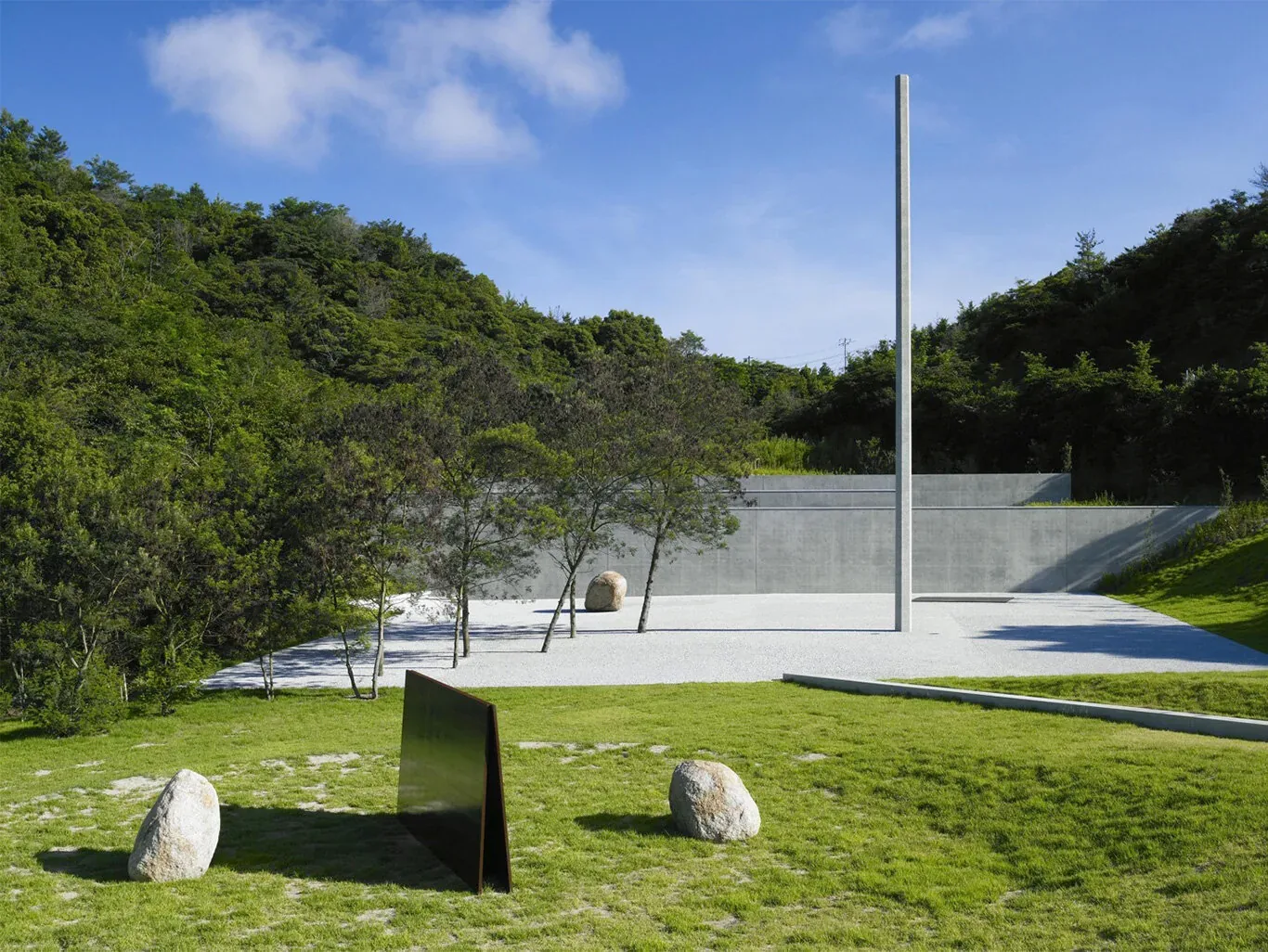
A natural stone faces a sheet of industrial steel, and the space between them is the work. The Lee Ufan Museum, designed by Tadao Ando and opened in 2010, is half-buried in a valley and holds a permanent installation by Lee Ufan, the leading figure of Mono-ha: stone, steel plate, and large areas of deliberately empty space. Little else is present, and the void between the two is calculated, not incidental.
Its force comes from that restraint. Ando's half-underground concrete filters out the noise and the sense of time outside, so silence becomes part of the work. Little competes for the eye, which leaves a visitor registering the tension between stone and steel, the plain presence of the material, and the East Asian philosophy of relation and empty space. This was Lee's lifelong question: not to make more, but to let what already exists appear in the right relation.
On the Naoshima route this is the interlude that earns its place. Against the ceremonial scale of the Chichu Art Museum it is more inward and more argumentative, which makes it the right stop between dense viewings — a stretch in which a group settles and breathes. It suits the guest moved by minimalism and East Asian thought, for whom one stone and one empty space come closer to insight than a wall of famous paintings. Depth reached with less is what a discerning guest remembers.