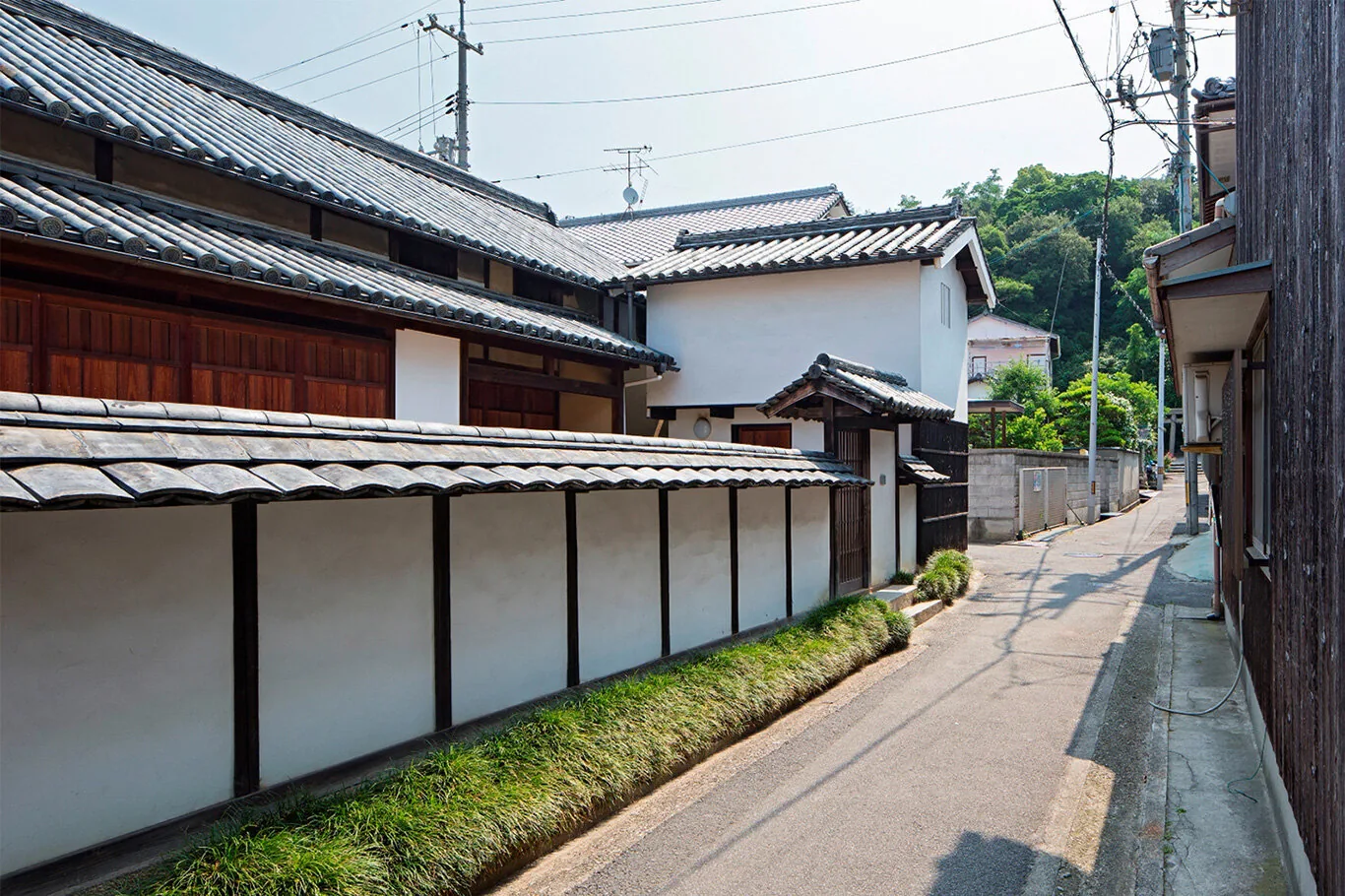
The Art House Project replaces the gallery with a village where people still live. Since 1998 it has built nothing new. Old houses, empty houses and a shrine in the Honmura district of Naoshima have been handed to artists to remake, so a visitor walks lanes where laundry is out, pushes open what looks like an ordinary wooden door, and finds a single work of contemporary art inside.
Each house is a meeting between the village's memory and contemporary art. In Tatsuo Miyajima's Kadoya, LED digits blink at their own speeds over the water of a darkened room, and because residents of Honmura set those speeds themselves, the time has body heat in it. Hiroshi Sugimoto's rebuilt Go'o Shrine joins the hall above ground to the stone chamber below with a staircase of optical glass. In Minamidera, by Tadao Ando with James Turrell, visitors sit for several minutes in complete darkness until the eye begins to find a light that was not there. None of this hangs on a white wall; it is set into the layers of time in the village.
As an opening to the Naoshima story it is hard to better. Guests stop being an audience and become explorers, finding the work while walking through ordinary life and meeting the village's memory, sometimes the residents with it. It suits curious travelers and small exploratory programs, and art grown inside a working village carries a warmth no closed gallery holds.