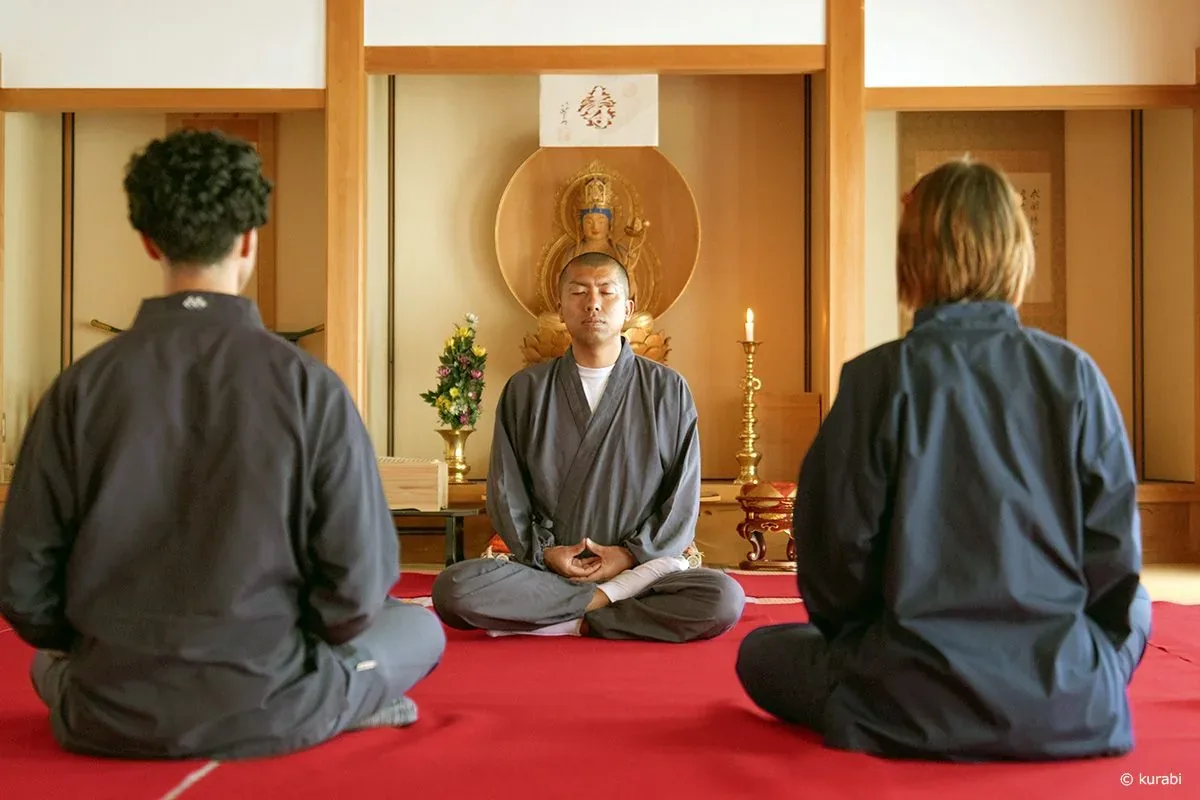
Take a hundred people to "experience Japanese culture," and it usually ends one way. A hundred people stand and watch one person demonstrate.
kurabi's answer is to take Nara apart. The city is a place where Buddhism and craft have been settling for a thousand years, and they cut it into separate classes: for going still, there is meditation, shakyo (copying sutras by hand) and tea; for using your hands, there is wagashi, miso, and Nara woodwork. Which classes, at what hour, in how many groups — it is all assembled on the spot around the size and the schedule of the party.
So a single afternoon looks like this: in this room no one is speaking, only the sound of brush-tips pressing into paper, a row of people copying out the same passage of sutra; next door, palms pressing miso into a barrel layer by layer, the smell of it salty; further along, shavings curling off the wood and settling all over the floor, sawdust on everybody's cuffs. Two hundred people spread across several rooms, and every one of them with something of their own in their hands.
It will also come to the group. Into a hotel, into a temple, into the venue itself — the class slots into the gap in the middle of the meeting schedule, and a large party never has to be moved back and forth. For a team in meetings three days running, those two hours in the middle are enough.
So when it breaks up, what they are holding is not a uniform gift handed out to everyone. It is the one they made badly and then made again. The sheet with the crooked characters he probably will not be able to throw away; the uneven edge he planed into the wood — only he knows which stroke left it there. Long after he is back at the office, that thing is still on his desk. It is still there because that day he was not standing to one side watching someone else make it.