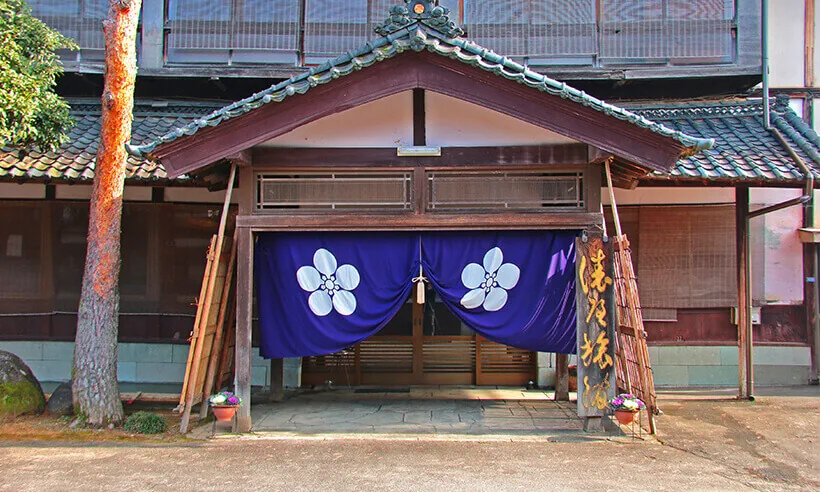
Echizen-Ono is a castle town ringed by mountains. After the Doi clan took the domain in the seventeenth century, the streetscape along Shichiken-dori settled into the shape it still holds four hundred years later, and one of Japan's oldest morning markets still sets up on that street at dawn.
Tawaraya Ryokan stands on it, a few minutes' walk from the market stalls. Two stories of wood in the manner of an old village schoolhouse, the eaves thrown far out to shed snow. An aged wooden plaque hangs at the entrance; local town-history records attribute the calligraphy to Inukai Tsuyoshi.
Guests are met with a bowl of matcha, whisked with Ono's spring water and served with a seasonal sweet. The tatami rooms are arranged around an inner garden, and dinner is what this valley eats: simmered taro, mountain vegetables, crab in winter. The master also has a hand with eel.
This is not an inn you need an introduction to enter, and two meals with a night's stay come to around ten thousand yen. Its value lies elsewhere: it is a real provincial ryokan, still simply in business. When an itinerary needs one night that steps down out of the polish of Kyoto or Tokyo and lands in the life Japanese people actually live, this does more than another luxury property would.