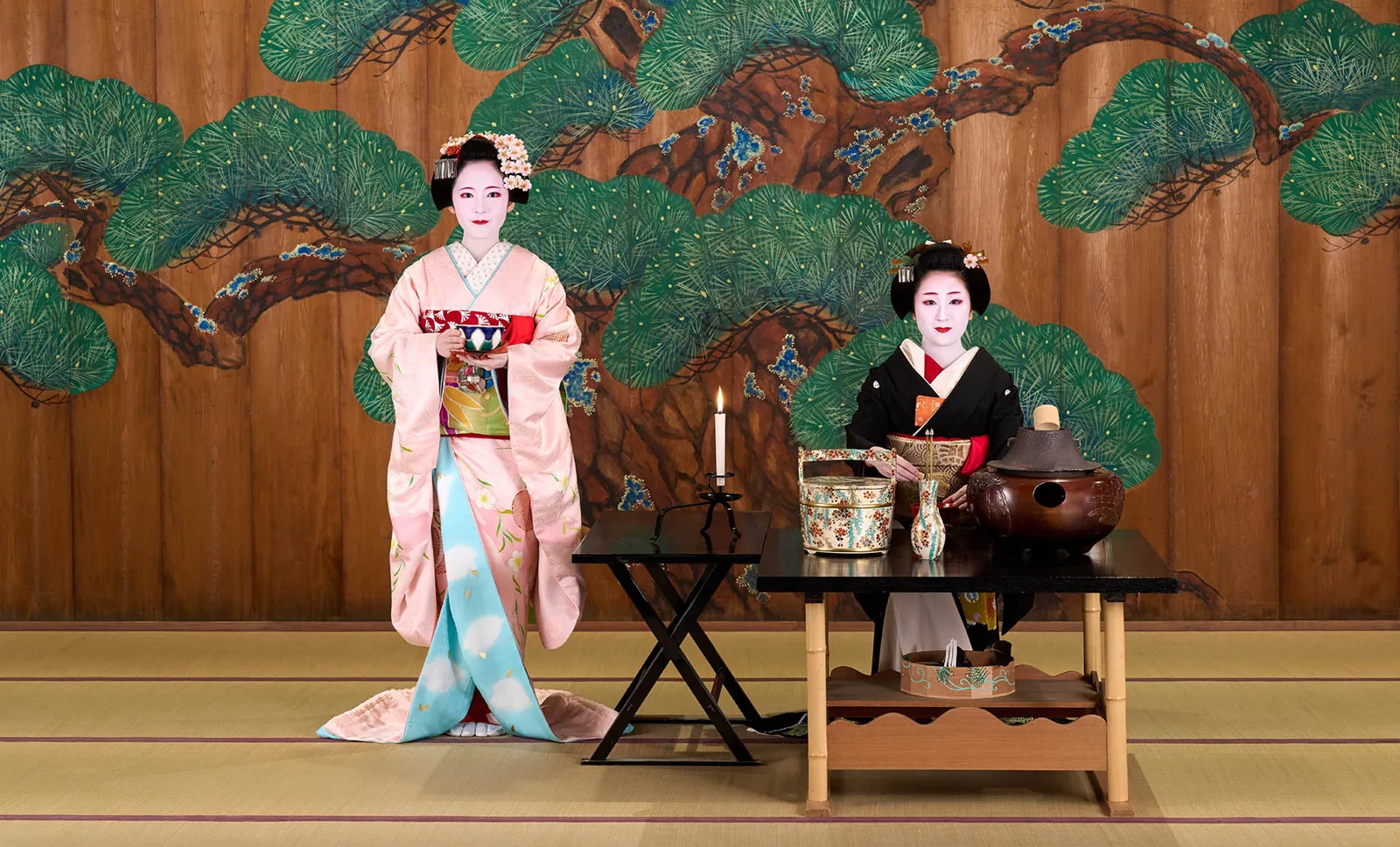
In Kyoto there is one threshold that has nothing to do with price. It asks only whose introduction brought you. The ochaya of Gion still keep ichigensan okotowari, turning away the guest who comes without one: without a regular, or an intermediary the teahouse trusts, no budget secures a real private ozashiki. This is a rule the old hanamachi have carried to the present, and one of the few thresholds in this library that money genuinely does not cross.
Harder than the threshold is the time. Geiko and maiko work limited hours and an evening usually takes one party only, so what a party books is not a seat but the fact that they will not be anywhere else that night. Kaiseki arrives course by course, a maiko dances an arm's length away, the shamisen sounds in a room that belongs to no one else, and then come the ozashiki-asobi, the parlor games that only come alive on these tatami and only when a geiko leads them herself. There is no stage and no seating for an audience; between the women and the guest there is nothing but the width of a sake cup. This is the innermost and most private layer of Kyoto hospitality.
Where money does not reach, an introduction does, but the introduction has to have a name on it.