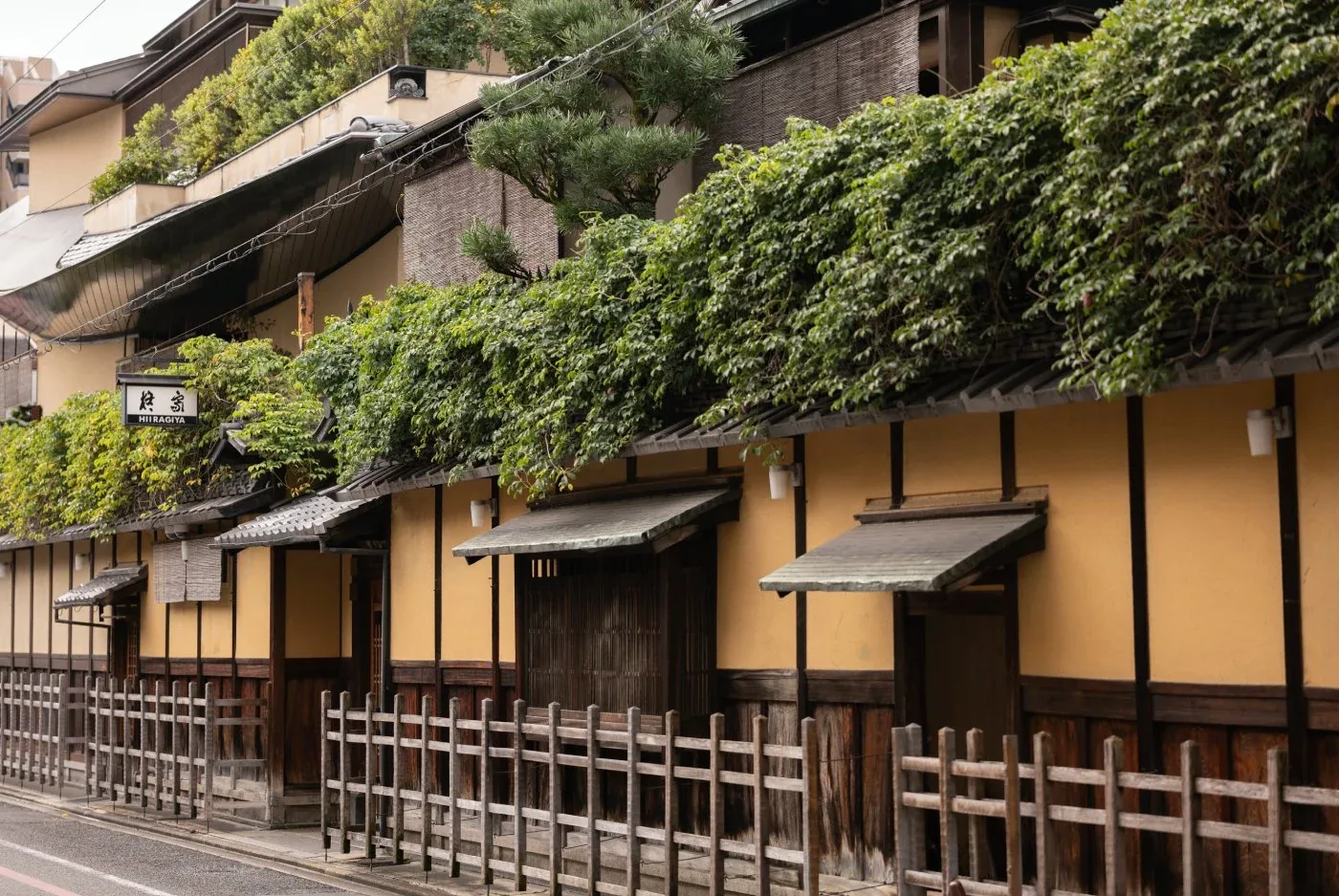
Two ryokan face each other across one narrow Kyoto lane. One is Tawaraya, which has received guests since the Hoei era of 1704–11; the other is Hiiragiya, founded in 1818. For two centuries they have sharpened between them the highest standard of Japanese hospitality. To stay at Hiiragiya is to choose a stretch of time that writers and the imperial household have both kept company with, and the spirit that meets a guest at the entrance has not changed: those who come are coming home, and those who leave will come again.
Its rarity is not luxury but sukiya, the tea-house idiom of building that is now close to lost. Every post and beam, every sliding paper screen and alcove is made by hand to the restraint and empty space the tea aesthetic asks for. Wood, paper, earth and light are placed to the millimeter. This is not a restored set piece for nostalgia; it is a working house, used daily and maintained by craftsmen. A guest lives briefly inside history rather than touring it, which is what no newly built luxury hotel can reproduce, whatever the capital behind it.
For guests who want cultural depth, or for a family journey, Hiiragiya works as the quiet, weighted anchor of a Kyoto itinerary. Days go to artisans, tea and gardens; nights come back to a 200-year-old sukiya house and let the day settle. It does not raise its voice and it does not perform, and it makes the point plainly: what Kyoto means by the first rank is a bearing grown out of time and restraint.